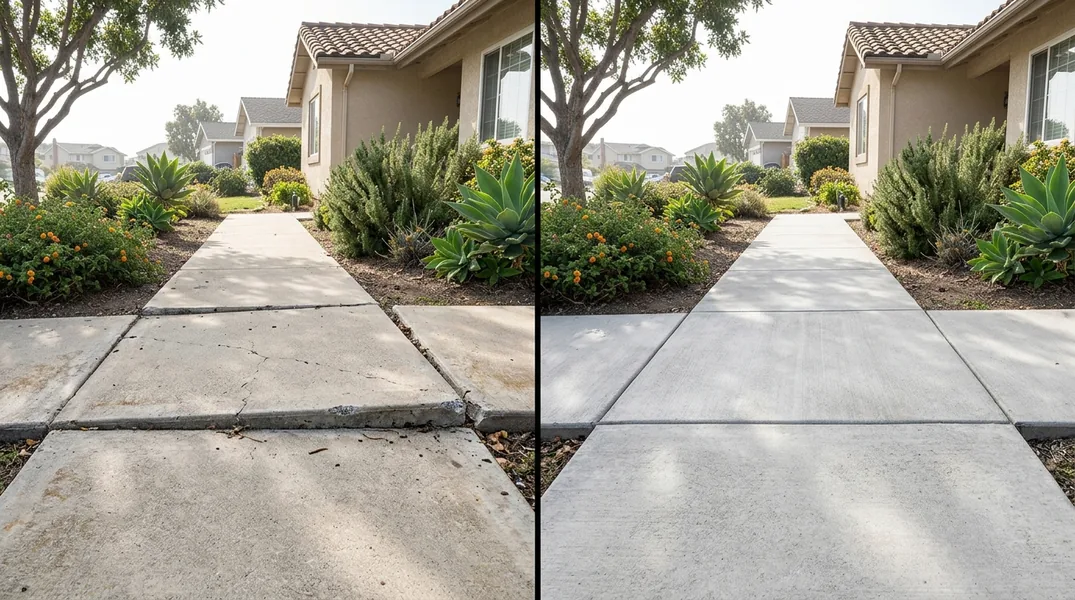
Oceanside's Unique Soil Challenge: Expansive Clay
If you own property in Oceanside, you've likely noticed the distinctive reddish-brown soil that dominates the hillsides and neighborhoods throughout the area. This isn't ordinary dirt. Much of Oceanside sits on expansive clay soils, a geological reality that poses one of the most serious threats to concrete structures, including driveways, patios, and foundations.
Expansive clay is deceptively problematic because its behavior changes dramatically with moisture. When it absorbs water, it swells. When it dries, it shrinks. This constant expansion and contraction cycle creates immense pressure beneath concrete surfaces, causing the material to crack, heave, and settle unevenly. Homeowners often assume their Concrete Driveways are failing due to poor installation or age, when in reality the ground beneath is literally moving. The pressure exerted by expanding clay can exceed thousands of pounds per square foot, far exceeding the structural capacity of standard concrete to withstand without damage.
The problem intensifies during Oceanside's rainy season. Heavy winter rains soak into the clay, triggering expansion that can push a driveway upward by several inches over time. Conversely, during dry summers, the clay contracts, creating voids beneath the surface that cause sections to sink and crack. This freeze-thaw equivalent (though driven by moisture rather than temperature) is relentless, which is why so many driveways in the area develop distinctive stair-step cracks and surface breaks within just a few years of installation.
Salt Air Corrosion: The Coastal Concrete Enemy
Living near the Pacific Ocean comes with undeniable benefits, but it also exposes concrete to a particularly aggressive environmental threat: salt air. Oceanside's proximity to the coast means that salt spray and salt-laden moisture penetrate deeper into concrete than most homeowners realize. This isn't just surface-level damage. Salt ions work their way into the concrete's pores and attack the reinforcing steel beneath, triggering a process called corrosion that weakens the structure from within.
When salt reaches the steel rebar or wire mesh embedded in concrete, it breaks down the protective oxide layer that normally prevents rust. Once that protection is compromised, the steel begins to oxidize. As rust forms, it expands, creating internal pressure that forces the concrete to crack and spall (break apart in chunks). This is why homes just a few miles from the shore often experience more severe concrete damage than those further inland. The salt air doesn't just sit on the surface and wash away. It's continuously deposited by wind, carried in fog, and absorbed into porous concrete where it remains active for years.
Regular maintenance and proper installation techniques become essential in coastal areas. Concrete Repair & Resurfacing services are often necessary to address salt-induced damage before it becomes structural. Applying sealers, ensuring proper drainage, and choosing air-entrained concrete mixes (which include tiny air bubbles that allow salt-contaminated water to escape) are proven strategies to extend the life of coastal concrete installations.
How Hillside Soil Cracking Affects Your Driveway
Oceanside's topography features numerous hillsides with varying degrees of slope, and this elevation change compounds the concrete damage problem. When concrete is poured on sloped terrain with expansive clay soil, the forces at play become even more complex. Water naturally flows downhill, which means the clay on the uphill side of a driveway absorbs more moisture than the downhill side. This creates uneven swelling, where one section of your driveway expands more than another, resulting in dramatic cracking and buckling.
Additionally, hillside properties are more vulnerable to soil settlement and landslide risk during heavy rains. Even minor soil movement can cause the concrete above to shift, develop cracks, or become uneven. Homeowners often notice that cracks in hillside driveways follow specific patterns: diagonal cracks that follow the slope, step cracks that mirror underlying soil fractures, or a pronounced high side and low side that suggests the concrete has shifted on its foundation. These patterns aren't random. They're direct evidence of the soil dynamics occurring beneath the surface.
The combination of expansive clay and hillside terrain means that standard concrete installation methods may not be sufficient. Proper grading, drainage systems, and sometimes specialized foundation preparation are necessary to minimize damage. If you're experiencing cracking or settling in a hillside driveway, professional assessment is crucial. The damage you see on the surface is often just the visible symptom of much larger forces at work underground.
Recognizing Early Signs of Concrete Damage in Oceanside
Early detection of concrete problems can save thousands of dollars in repairs. Homeowners should watch for several warning signs that indicate their driveway or patio is beginning to fail due to soil movement or salt air exposure. Fine hairline cracks that appear within the first year or two of installation are a red flag, especially if they're widening over time. Unlike minor surface crazing (which is cosmetic), structural cracks that you can fit a credit card into represent genuine concern and warrant professional evaluation.
Uneven surfaces are another critical indicator. If one section of your driveway is noticeably higher or lower than an adjacent section, or if you notice a lip or step between panels, the concrete has shifted. This is particularly common in Oceanside properties where expansive clay is present. Spalling (the appearance of small pits or surface breaking where chunks have separated) is often a sign of salt air damage, particularly if you live within a mile of the coast.
Scaling, where the concrete surface flakes or peels in layers, is another coastal concern. If your driveway is showing any of these signs, don't wait for the problem to worsen. Contact Oceanside Concrete at (760) 496-5421 to schedule a free estimate and get professional guidance on whether your concrete can be restored or if replacement is the better long-term investment.
Concrete Repair and Prevention Strategies for Oceanside Properties
Concrete Repair & Resurfacing is often the most practical solution for driveways and patios that are showing signs of damage from clay expansion or salt air. Depending on the severity, repairs might include filling and sealing cracks, resurfacing the top layer, or in some cases, complete replacement. The key is assessing the underlying cause. If expansive clay is the culprit, simply patching cracks will only provide temporary relief. The concrete will continue to crack as the soil continues to move.
Prevention is always preferable to repair. For new concrete installations, several strategies can significantly extend the life of your driveway or Concrete Patios. Proper site preparation includes removing unstable soil, compacting the base, and installing drainage systems to manage water flow. Using air-entrained concrete, which contains microscopic air bubbles, helps the material withstand freeze-thaw cycles and salt exposure better than standard mixes. Applying a quality concrete sealer every two to three years creates a protective barrier against salt penetration and reduces water absorption.
For existing driveways, regular maintenance is essential. Keep gutters and downspouts functioning properly to direct roof water away from the foundation and driveway perimeter. Avoid allowing water to pool or collect near concrete surfaces. If you live on a hillside, ensure that grading slopes away from structures to promote drainage. These simple practices, combined with periodic sealing, can dramatically reduce the rate of concrete deterioration in Oceanside's challenging environment.
When to Call Oceanside Concrete: Professional Assessment Matters
Deciding whether to repair, resurface, or replace concrete is not a decision homeowners should make alone, especially in Oceanside where soil and environmental factors are so significant. A professional inspection can reveal whether damage is cosmetic or structural, whether the underlying soil is stable or continuing to move, and what approach will provide the best long-term value. What appears to be a simple crack might indicate a much larger problem developing beneath the surface.
Oceanside Concrete has years of experience working with the specific soil and climate challenges that affect properties throughout the area. Our team understands expansive clay behavior, salt air corrosion, and hillside soil dynamics. We can assess your concrete, identify the root cause of any damage, and recommend solutions tailored to your property's unique conditions. Whether you need Concrete Repair & Resurfacing, a new driveway designed to withstand local conditions, or guidance on preventive maintenance, we're here to help.
If you're noticing cracks, uneven surfaces, spalling, or other signs of concrete distress, don't delay. Contact us at (760) 496-5421 or visit our website to request a free estimate. We'll evaluate your situation thoroughly and provide honest recommendations about the best path forward. Oceanside's challenging environment demands concrete solutions that are specifically engineered for local conditions, and that's exactly what we provide.
Looking for a professional concrete contractor in Oceanside? Oceanside Concrete responds fast for all your concrete needs.
Get a Free QuoteOur services: Concrete Driveways · Concrete Patios · Stamped & Decorative Concrete